




Isaac Newton, like Albert Einstein, is a quintessential symbol of the human intellect and its ability to decode the secrets of nature. Newton's fundamental contributions to science include the quantification of gravitational attraction, the discovery that white light is actually a mixture of immutable spectral colors, and the formulation of the calculus. Yet there is another, more mysterious side to Newton that is imperfectly known, a realm of activity that spanned some thirty years of his life, although he kept it largely hidden from his contemporaries and colleagues. We refer to Newton's involvement in the discipline of alchemy, or as it was often called in seventeenth-century England, "chymistry." Newton wrote and transcribed about a million words on the subject of alchemy. Newton's alchemical manuscripts include a rich and diverse set of document types, including laboratory notebooks, indices of alchemical substances, and Newton's transcriptions from other sources.
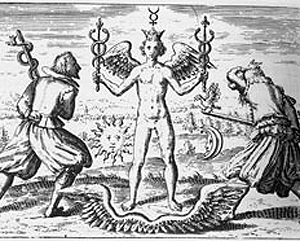
It is important to see how chemical technology and medicine were connected to Newton's involvement to the "Great Work," just as it is important to see how his chymistry was related to his other intellectual and technical pursuits. Newton & Alchemy
Computational tools to aid analysis of the language and projects encompassed in Newton's alchemical manuscripts. Latent Semantic Analysis
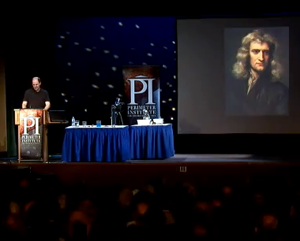
William R. Newman presented a lecture titled Why did Isaac Newton Believe in Alchemy? at the The Perimeter Institute on October 2, 2010. Project Presentations
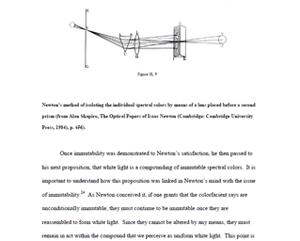
 This article provides the first evidence that Newton's radical discoveries in the realm of light and color owed a significant debt to his alchemical research. Read today.
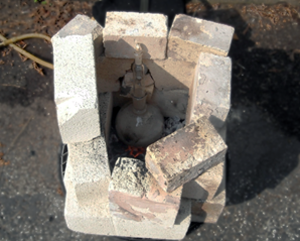
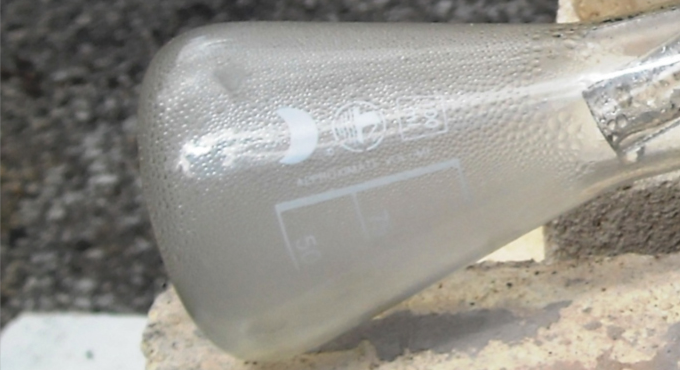
Newton describes the production of the spirit of salt (hydrochloric acid) in Don b. 15, p.8v, as follows: "Spirit of Salt. Common salt, beat fine in 1 part brick-dust or potters earth not over dryed & pouder 5 parts : urge by a graduall fire out of a glass retort filld full into a large receiver till you feel the receiver cold & one pound will yeild nine or 10 ounces."
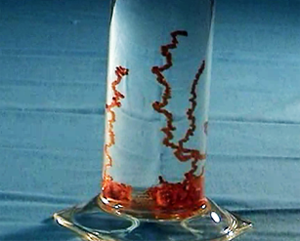
In Newton's day, a silica garden was usually made by placing lumps of ferric chloride in a solution of potassium silicate.
Silica gardens encouraged the idea that minerals were vegetative.
See videos demonstrating this process and five other reactions that shaped the thinking of early modern chymists on our Multimedia Lab page.
